The MSP Lead Source Concentration Problem: Why 80% of Your Pipeline Comes From One Channel (And How to Build a Diversified System That Survives Algorithm Changes)
Most MSP owners don't realize they have a concentration problem until something breaks. The referral partner who sent three clients a year retires. Google updat...
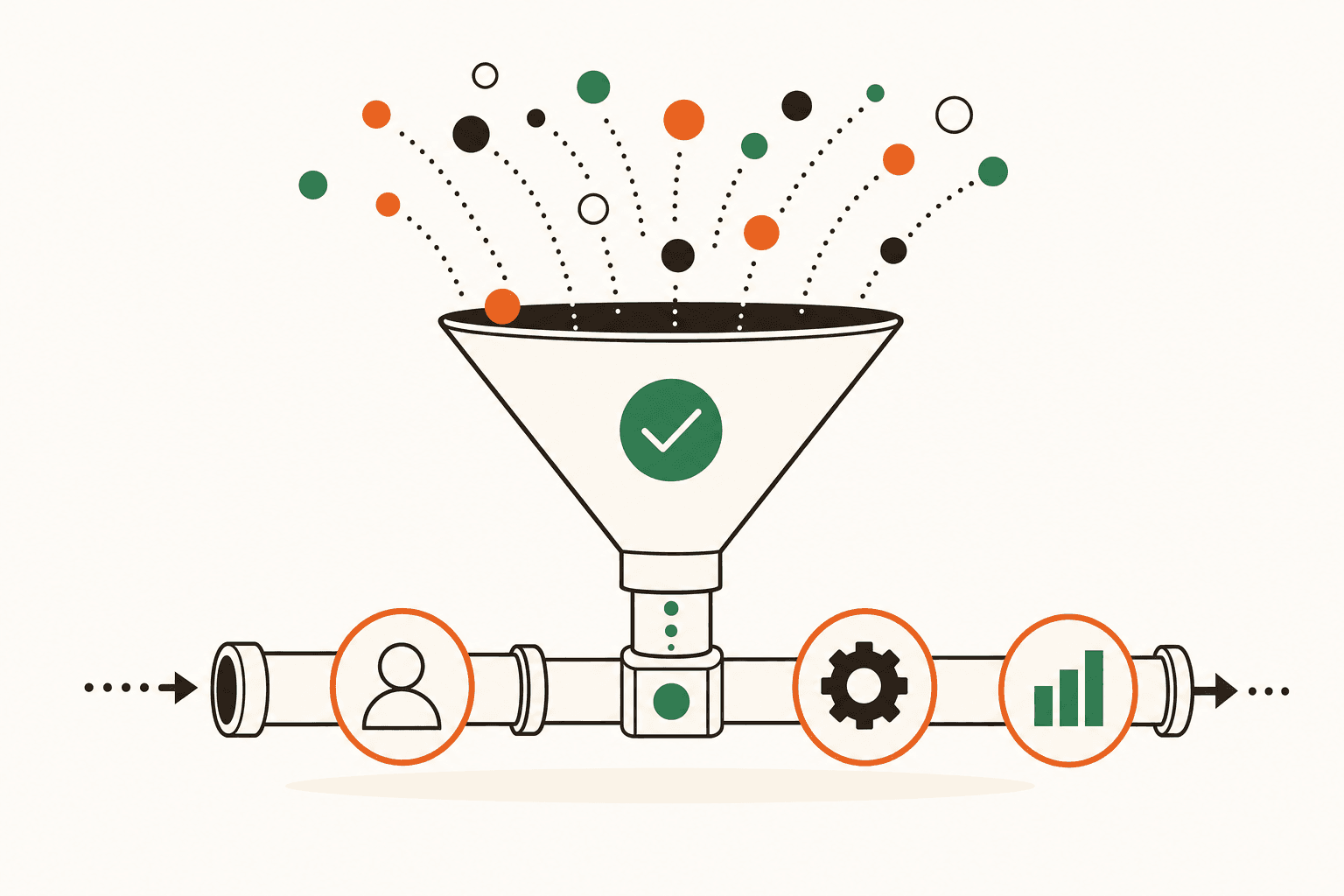
Most MSP owners don't realize they have a concentration problem until something breaks. The referral partner who sent three clients a year retires. Google updates its local algorithm and your "managed IT services [city]" ranking drops from page one to page three. Your LinkedIn outreach stops landing because the platform throttled connection requests again. And suddenly you're staring at a pipeline that looked healthy six months ago and wondering where the next deal is coming from.
The frustrating part is that none of this is a marketing failure in the traditional sense. You didn't do anything wrong. You just built your pipeline on a foundation you don't control—and most MSPs do exactly the same thing.
This post is about diagnosing your actual lead source concentration, understanding why single-channel dependency is more dangerous for MSPs than it is for most B2B businesses, and building a system with enough diversity that one algorithm change or one retired referral partner doesn't crater your quarter.
Why MSPs Are Especially Vulnerable to Single-Channel Collapse
Most professional services businesses can absorb a slow quarter. A law firm with 40 long-term clients doesn't panic when referrals dry up for 60 days. But MSPs operate on seat-based recurring revenue with a specific problem: the gap between "pipeline looks fine" and "we have a serious growth problem" is invisible until it isn't.
Your MRR stays flat while your referral pipeline quietly dries up. You're still billing the same amount. Retention is solid. Nothing feels urgent. Then you lose two clients to a competitor who's been running LinkedIn ads and doing local SEO for two years, and your replacement pipeline is empty because you haven't been building one.
The other reason MSPs are uniquely exposed: your sales cycle is long. A typical SMB owner doesn't switch IT providers on impulse. From first touch to signed agreement, you're usually looking at 60 to 180 days depending on seat count and complexity. That means if your primary lead source collapses today, you won't feel it in revenue for another two to four months. By the time the pain is obvious, you're already behind.
How to Diagnose Your Actual Concentration
Before you can fix this, you need an honest picture of where your clients actually came from. Pull your last 15 to 20 signed clients—or as far back as your CRM or PSA records go—and categorize each one.
Most MSPs, when they do this exercise, find something like this:
| Lead Source | % of Clients | Do You Control It? |
|---|---|---|
| Direct referrals from existing clients | 55–65% | Partially |
| Referral partner (accountant, attorney, etc.) | 15–20% | No |
| Google / organic search | 10–15% | No |
| Outbound (cold call, email, LinkedIn) | 5–10% | Yes |
| Events / community / chamber | 5% | Partially |
"Partially" is doing a lot of work in that table. You can influence how many referrals you get from existing clients—asking the right way matters more than most MSPs think—but you can't manufacture them on demand. Referral velocity is a lagging indicator of client satisfaction and relationship depth, not something you can turn up when you need deals in the next 90 days.
The question to ask yourself: If your single largest lead source disappeared tomorrow, what would your pipeline look like in six months?
If the answer is "we'd be in serious trouble," you have a concentration problem worth solving.
The Three Lead Sources MSPs Most Often Over-Rely On (And What Makes Each One Fragile)
1. The Anchor Referral Partner
A lot of MSPs have one—a commercial real estate broker, a business attorney, or a CPA firm that sends two to five qualified leads a year. It feels like a channel. It's actually a relationship with an expiration date you don't know.
That partner retires. They get acquired. They start recommending their nephew's IT company. They move to a different market. Any of those things can happen, and there's no warning.
The fix isn't to stop cultivating referral partners—it's to stop treating one partner as a channel. A real referral partner program means five to eight active relationships, each sending one to two leads per year, so no single person's exit is catastrophic.
2. Google Local / Organic Search
If you've invested in SEO and your Google Business Profile, you've seen what happens when Google updates its algorithm. Rankings that took 18 months to build can shift meaningfully in a week. Your Google Business Profile is genuinely worth optimizing—but it shouldn't be the only digital channel you're running.
The specific risk for MSPs: local SEO for "managed IT services [city]" is a competitive, low-trust search. Someone Googling that term is probably comparing four providers and going with whoever has the most reviews and the clearest pricing page. You're not differentiated. You're in a race.
Organic search is worth building. It just shouldn't be the only channel you're counting on, because you have zero control over when Google decides to change the rules.
3. LinkedIn Outreach
LinkedIn became a popular channel for MSPs around 2019 to 2021 when connection request acceptance rates were high and message open rates were reasonable. Then the platform started throttling automated outreach, lowering connection limits, and surfacing paid content over organic. What worked in 2021 doesn't work the same way in 2025.
LinkedIn still has a place in an MSP's channel mix—particularly for targeting specific verticals like healthcare, legal, or financial services where the buyer persona is identifiable by job title. But MSPs who built their entire outbound motion around LinkedIn connection sequences are now dealing with declining response rates and no fallback.
What Most MSPs Get Wrong: They Diversify Channels, Not Motions
Here's where I see the real mistake happen. An MSP owner reads something like this post, decides they have a concentration problem, and goes out and adds three new channels at once. They start running Google Ads, post on LinkedIn twice a week, and sign up for a lead list service. Six months later, none of it is working, and they conclude that "marketing doesn't work for MSPs."
The problem isn't channel diversity. It's motion diversity.
There's a meaningful difference between channels and motions:
- A channel is where you're showing up (Google, LinkedIn, referrals, events)
- A motion is how you generate demand (inbound, outbound, referral activation, community presence)
A resilient MSP pipeline needs at least two distinct motions running simultaneously—not just two channels. Here's why: if all your channels are inbound (SEO, Google Ads, your website), they all share the same vulnerability. A prospect has to find you. If your intent drops—because of an economic slowdown, a Google update, or just seasonality—all your inbound channels go quiet at the same time.
The combination that actually creates resilience is one inbound motion and one outbound motion, running in parallel, each generating at least 20 to 30% of your pipeline.
A practical version of this for a 30-seat MSP targeting professional services firms in their metro:
- Inbound: Local SEO + Google Business Profile + two or three educational blog posts per month targeting buyer-intent searches in their vertical
- Outbound: A structured cold outreach sequence (phone + email) targeting 50 to 75 new contacts per month in their niche, with a clear value proposition tied to compliance or downtime risk
Neither motion alone is sufficient. Together, they mean a Google algorithm change doesn't stop the outbound motion, and a month where the outbound team is short-staffed doesn't kill the inbound pipeline.
If you're curious how the outbound side of this actually sounds in practice, this cold call framework is worth reading before you start dialing.
Building the System: Sequencing Matters More Than Completeness
The goal isn't to run every channel. The goal is to build a system where no single point of failure can collapse your pipeline. Here's how to sequence that based on where you are.
Under $1M ARR
At this stage, you probably don't have dedicated marketing budget or a person who owns pipeline development. The right move is not to diversify into five channels—it's to make your referral motion more intentional while standing up one outbound motion.
Specifically:
- Formalize your referral ask process so you're generating one to two referrals per month from your existing base
- Pick one vertical and run a focused outbound sequence targeting 40 to 60 contacts per month
- Don't invest heavily in SEO yet—the payback timeline is too long relative to your immediate pipeline needs
$1M to $3M ARR
You have enough MRR to fund real marketing activity and enough client history to know which verticals you serve well. This is where channel diversification starts making sense.
- Keep the outbound motion running—it's your most controllable channel
- Invest in local SEO and your Google Business Profile so inbound starts building
- Develop two to three referral partner relationships in adjacent professional services (accountants and attorneys are the most common, but commercial insurance brokers are underrated for MSPs targeting SMBs)
- If you've niched into a specific vertical, consider vertical-specific content that targets the exact pain points your buyer persona searches for
$3M to $5M ARR
At this stage, you should have enough pipeline data to know your cost per lead by channel and your close rate by lead source. If you don't have that data, building it is the first priority.
With that data, you can make real decisions: which channels produce the highest-quality clients (not just the most leads), where your CAC is sustainable, and where to double down versus where to pull back.
This is also the stage where paid channels—Google Ads, LinkedIn Ads for vertical targeting—start making economic sense, because you have enough deal volume to optimize against real conversion data.
How to Think About This for Your Situation
If you take one thing from this post, make it this: pipeline resilience isn't about having more channels, it's about having channels you control and channels that find you working in parallel.
The diagnostic question is simple. Look at your last 12 months of new clients and ask: if the source of my top three clients disappeared tomorrow, what's left? If the answer is "not much," you're not in crisis—but you're one bad quarter away from one.
The fix is sequential, not simultaneous. Pick the motion you're missing (inbound or outbound), build it deliberately over the next 90 days, and resist the urge to run everything at once. A focused outbound motion targeting 50 contacts per month in a specific vertical will outperform a scattered presence across six channels every time.
If you're trying to figure out which motion to build first and what's actually driving your concentration problem, a 30-minute strategy call usually surfaces the answer pretty quickly. It's not a sales conversation—it's a diagnostic. We look at where your pipeline is actually coming from and what's creating the single point of failure.
The MSPs who build durable businesses aren't the ones with the most marketing channels. They're the ones who built systems that keep generating leads even when one piece stops working. That's a different goal than "more leads"—and it requires a different approach than adding another tactic to the list.
Your pipeline doesn't need to be complicated. It needs to survive.
Ready to Build a Real Pipeline?
A 30-minute call with Gavin to discuss your marketing situation and see if we're a good fit. I run marketing campaigns for MSPs - no pitch, just an honest conversation about what you need.