The MSP Lead Source Audit: Why Your Best Prospects Come From 1–2 Channels (And You're Wasting Time on the Rest)
You're probably running somewhere between four and eight lead channels right now. Maybe you're sending cold emails, asking for referrals, posting on LinkedIn, r...
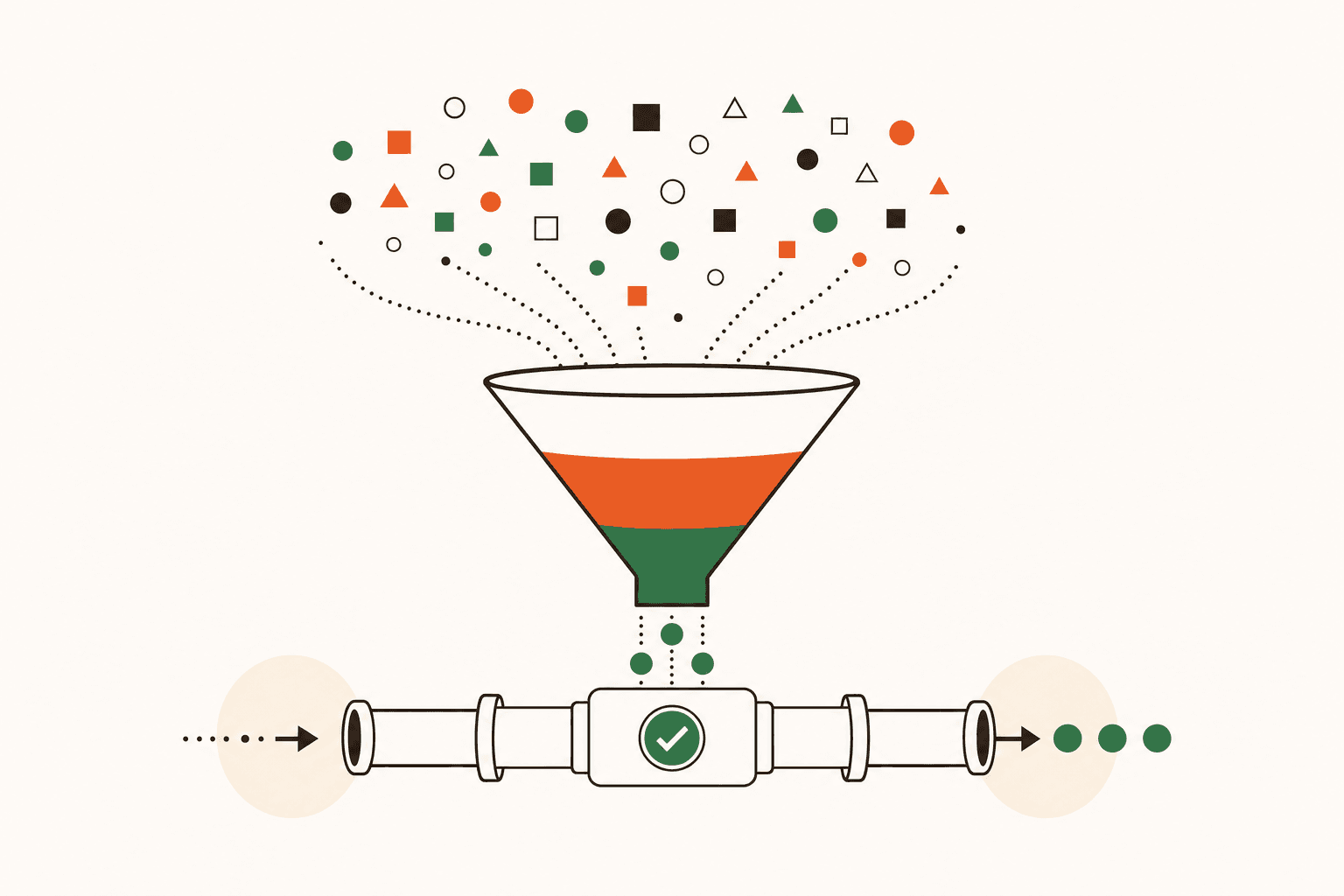
You're probably running somewhere between four and eight lead channels right now. Maybe you're sending cold emails, asking for referrals, posting on LinkedIn, running Google Ads, attending a BNI chapter, sponsoring a local chamber event, and occasionally doing outbound calls when things feel slow. You're not doing any of them badly. You're just not doing any of them well enough to matter — because your attention is spread too thin to build real momentum in any single direction.
This isn't a discipline problem. It's a math problem. And it's costing you more than you think.
If you're running a 30–80 seat shop and trying to grow, the difference between a predictable pipeline and a feast-or-famine cycle usually isn't the number of channels you're working — it's how ruthlessly you've committed to the one or two that actually produce. This post is about how to figure out which channels those are for your business, what to do with that information, and why doubling down on them will generate more qualified MSP leads than everything else you're doing combined.
Why Spreading Across Channels Feels Smart But Isn't
The instinct makes sense. You don't want to be dependent on one source. What if referrals dry up? What if Google changes the algorithm? Diversification feels like risk management.
But there's a difference between diversification that protects a mature pipeline and diversification that prevents a young one from ever developing. For most MSPs under $3M ARR, spreading effort across six channels doesn't reduce risk — it guarantees mediocrity across all of them.
Here's the mechanical reason: most MSP lead channels don't produce results until you've invested consistently for 60–120 days minimum. Cold outreach needs sequence refinement, list quality improvements, and follow-up cadence tuning. SEO and content take months to compound. Even referral systems need repeated reinforcement before they run on their own. When you're splitting your time and budget across six channels, none of them ever get past the "early traction" phase before you rotate attention somewhere else.
The MSPs I see generating 8–12 qualified appointments per month aren't doing more. They're doing less, better, for longer.
How to Run a Lead Source Audit (Without a CRM Full of Clean Data)
Most MSPs don't have perfect attribution data. That's fine. You don't need a perfect dataset — you need an honest one.
Pull your last 20 clients. For each one, answer three questions:
- Where did the conversation start? (Referral from whom, cold outreach, inbound web, event, etc.)
- How long did it take from first contact to signed agreement?
- What's their current MRR, and are they a client you'd clone?
That last question matters more than most MSP owners realize. A channel that produces fast-closing, low-MRR clients who are a pain to manage isn't a good channel — it just looks productive on a spreadsheet.
Once you've mapped your last 20 clients to their source, you'll almost always see a pattern. Two or three channels produced 70–80% of your best clients. The rest produced a handful of marginal deals that took too long to close and too much effort to retain.
If you don't have 20 clients to look back on, use your last 12 months of closed deals and your pipeline — including deals you lost. Lost deals tell you just as much about channel quality as won ones.
The 6 Channels Most MSPs Are Running (And Which Ones Actually Work)
Here's an honest breakdown of the most common MSP lead channels and what you should realistically expect from each:
| Channel | Time to First Result | Cost to Do Well | Best Fit For |
|---|---|---|---|
| Client referrals | 30–60 days (with a system) | Low | MSPs at any stage with satisfied clients |
| Cold email outreach | 60–90 days | Low–Medium | MSPs with a defined vertical or geography |
| Cold calling | 30–60 days | Low | MSPs willing to build or outsource a calling function |
| Google Ads (PPC) | 2–4 weeks | High ($2K–5K+/mo) | MSPs in less competitive markets or with strong landing pages |
| SEO / content | 6–12 months | Medium–High | MSPs playing a long game with a content strategy |
| LinkedIn outreach | 60–90 days | Low–Medium | MSPs targeting specific industries or job titles |
| Events / networking | Variable | Medium | MSPs in tight-knit local business communities |
| Partner/vendor referrals | Variable | Low | MSPs with strong vendor relationships (Datto, ConnectWise, etc.) |
None of these channels are bad. But they're not equally good for every MSP at every stage. A 12-person shop at $800K ARR has no business running Google Ads at $4,000 a month when their referral system is broken and they've never done structured cold outreach. The ROI math doesn't work, and the operational lift of managing paid campaigns is a distraction from fundamentals.
What Most MSPs Get Wrong: They Measure Activity, Not Quality
This is where I see the most expensive mistakes.
An MSP owner tells me they're "doing LinkedIn." When I ask what that means, it turns out they're posting two or three times a week and occasionally commenting on posts. They've been doing it for eight months. They've gotten three inquiries — none of which converted.
They're not wrong that they're doing LinkedIn. They're wrong about what "doing LinkedIn" means as a lead generation channel for an MSP. Organic posting is brand maintenance, not lead generation. If you want LinkedIn to produce MSP sales leads, you need a structured outreach sequence targeting specific business owners in your vertical, a reason to connect that isn't "I'd love to connect," and a follow-up process that moves conversations off the platform. That's a different thing entirely.
The same problem shows up with referrals. Most MSPs have a referral "strategy" that consists of hoping satisfied clients mention them to someone. That's not a strategy — that's luck with a nice name. A real referral system means identifying your top five referral sources by name, having a specific ask you make at a specific point in the client relationship, and following up when nothing happens for 60 days. If you haven't read how to ask for MSP client referrals without making anyone feel awkward, that's worth your time.
The mistake isn't being on the wrong channel. It's running a surface-level version of the right channel and then concluding the channel doesn't work.
The Doubling Down Decision: What It Actually Looks Like
Once your audit surfaces your top one or two channels, the move is to build real infrastructure around them — not just do more of the same thing.
If referrals are your best channel:
- Identify your top 8–10 referral sources (clients, accountants, attorneys, insurance brokers, IT consultants who don't do managed services)
- Create a quarterly touchpoint cadence — not a newsletter, an actual conversation
- Build a referral brief: a one-page document that tells someone exactly who your ideal client is so they can refer with precision instead of guessing
- Track referrals by source so you know who's actually sending you business versus who just says they will
If cold outreach is your best channel:
- Commit to a specific vertical and geography rather than spraying broadly
- Build a sequence of at least five touches across email and phone before you consider a prospect cold
- Measure response rate by message variant, not just total volume
- If cold calling is part of the mix, this script framework is a good starting point for getting past the hang-up
The point isn't to do more — it's to build the channel into something that runs with consistency and produces results you can predict.
How to Think About This for Your Situation
Where you are in your growth trajectory changes which channels deserve your focus.
Under $1M ARR: Your fastest path to new MRR is almost always referrals and structured cold outreach — in that order. Referrals because you probably have satisfied clients who haven't been asked, and outreach because it's the only channel that lets you go get specific business instead of waiting for it. Don't touch paid advertising yet. You don't have the landing pages, the offer clarity, or the budget efficiency to make it work.
$1M–$3M ARR: You likely have a referral base that's working inconsistently. The goal here is to systematize what's already happening and add one outbound channel — cold email, cold calling, or LinkedIn outreach — with real infrastructure behind it. This is also the stage where niching down starts to dramatically improve outbound results, because your messaging gets specific enough to actually land.
$3M–$5M ARR: You have enough client base and brand presence to consider SEO and content as a longer-term play, and potentially paid search in your target vertical. But even here, the MSPs I see growing fastest are the ones who've built referral and outbound into something systematic — and are adding channels on top of that foundation, not instead of it.
At any stage: if you can't name your top two lead sources and tell me exactly what you're doing to generate more from each of them, the audit is the right first step. Not a new channel. Not a rebrand. Not a new website. The audit.
If you want a faster path to that answer, a 30-minute strategy call is usually enough to surface exactly where your pipeline is leaking and which one or two moves will have the most impact for your specific situation.
The Payoff of Fewer Channels Done Better
The MSP owners who break out of referral dependency and build a real pipeline aren't doing it by finding a magic channel nobody else knows about. They're doing it by picking the channels that fit their business, building real systems around them, and staying consistent long enough for those systems to compound.
Six mediocre channels will not outperform two excellent ones. The math has never worked that way, and it won't start working now.
Run the audit. Find your two. Build the infrastructure. Everything else is noise.
If you're ready to figure out which channels deserve your focus and what "building the infrastructure" actually looks like for a shop your size, see if you qualify to work with Behold Digital — we only take on MSPs where we're confident we can move the needle, and the qualification process itself usually surfaces a few things worth knowing.
Ready to Build a Real Pipeline?
A 30-minute call with Gavin to discuss your marketing situation and see if we're a good fit. I run marketing campaigns for MSPs - no pitch, just an honest conversation about what you need.