The MSP Lead Generation Velocity Problem: Why Your Pipeline Grows Too Slow to Hit Revenue Targets (And How to Compress Your Sales Cycle)
You've been generating leads. You've got a handful of prospects in your pipeline. Maybe you even closed a couple of deals in the last quarter. But you're still...
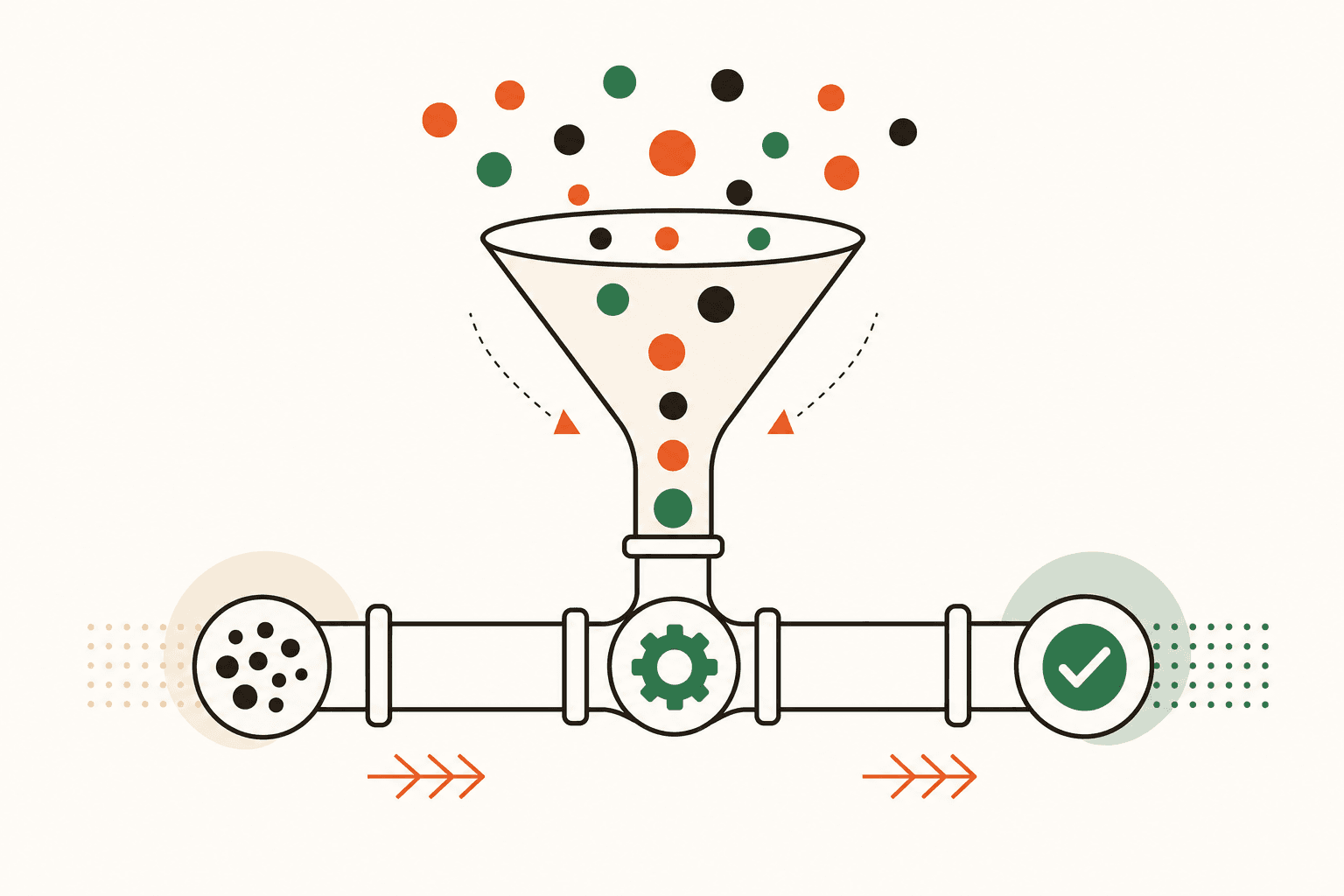
You've been generating leads. You've got a handful of prospects in your pipeline. Maybe you even closed a couple of deals in the last quarter. But you're still not hitting your revenue targets—and when you do the math, the problem isn't that you're not getting enough leads. It's that the ones you have are taking forever to close. Six months. Eight months. A year. You're managing a 30-seat client, trying to get to 80 seats under management, and your pipeline looks healthy on paper but feels like it's moving through concrete.
Most MSP owners at this stage conclude they need more leads. So they buy a list, spin up a LinkedIn campaign, or start asking for more referrals. More activity, more top-of-funnel volume. And it doesn't move the needle—because the problem was never volume. It was velocity.
The real bottleneck in MSP sales isn't lead generation. It's lead-to-close time. And until you compress that cycle, adding more leads just means managing more slow-moving deals that tie up your attention and distort your forecast. This post is about understanding where the friction actually lives in your sales process—and what to do about it at your stage of growth.
Why MSP Sales Cycles Are Structurally Long (And Which Parts You Can Actually Control)
Let's be honest about something: MSP deals take longer to close than most service businesses because the stakes are genuinely high for the buyer. You're asking a 20-person law firm or a regional accounting practice to hand over their entire IT infrastructure to someone they've known for three months. The risk calculus is real. A bad decision costs them money, downtime, and embarrassment.
But that structural reality doesn't explain why some MSPs close deals in 45 days while others are still "following up" with the same prospect 11 months later. The structural length of MSP sales cycles is maybe 60–90 days for a qualified prospect. Everything beyond that is friction you introduced—or failed to remove.
The friction usually lives in three places:
- Unclear qualification at the front end — you're nurturing prospects who were never going to buy
- Proposal timing that's disconnected from buyer readiness — you're sending quotes before the prospect has committed to change
- No urgency architecture — there's no mechanism in your process that makes "deciding now" feel better than "deciding later"
Most MSP owners work hard on the proposal itself and ignore the other two. That's why their close rate is low and their cycle is long.
The Qualification Problem: You're Nurturing Leads You Should Be Disqualifying
Here's what I see constantly: an MSP owner gets a referral or a warm inbound lead, has a decent first conversation, and then puts that prospect into a "nurture" sequence—monthly check-ins, forwarding relevant articles, maybe a lunch. Twelve months later, they're still "in conversation."
The uncomfortable truth is that most of those prospects weren't qualified in the first place—not because they don't need managed services, but because they weren't in a position to buy. They had an incumbent MSP with 18 months left on a contract. Their owner was thinking about selling the business. Their IT spend was controlled by a parent company. None of these things came up in the first call because nobody asked.
A tight qualification framework for MSP sales looks something like this:
- Current IT situation: Do they have an MSP? When does that contract expire or what would it take to switch?
- Decision authority: Is the person you're talking to the one who writes the check, or do they need board approval?
- Pain with a deadline: Is there a specific problem that needs solving—a compliance requirement, a recent breach, a growth event—that creates pressure to act?
- Budget reality: Have they ever paid for managed services? Do they understand what it costs?
If you can't get clear answers to all four in the first two conversations, you're not in a sales cycle. You're in a relationship that might eventually become a sales cycle. Those are different things, and conflating them is what causes pipelines to feel full while revenue stays flat.
Proposal Timing: The Single Biggest Cycle Compressor Most MSPs Ignore
Sending a proposal too early is one of the most common and costly mistakes I see in MSP sales. An owner has a great discovery call, the prospect seems interested, and so the proposal goes out within a week. Then nothing. Follow-up emails. "Just checking in." Silence.
What happened? The prospect wasn't ready to decide—they were ready to learn. Your proposal arrived before they'd committed to solving the problem, so it became a document they filed away rather than a decision they made.
The fix isn't a better proposal template. It's a better pre-proposal conversation. Before you send a quote, you need the prospect to have explicitly acknowledged three things:
- Their current situation is costing them something real (downtime, risk, staff time, compliance exposure)
- They've decided to do something about it
- They're evaluating you as a potential solution—not just gathering information
That third point is where most MSPs fall short. They assume interest equals intent. It doesn't. A business owner who says "we've been thinking about switching MSPs" is not the same as one who says "we've made the decision to switch and we're talking to two providers." The proposal you send to the first person will sit in their inbox for six months. The proposal you send to the second person will get a response within two weeks.
If you want a more detailed breakdown of what a winning proposal actually looks like once you've earned the right to send one, this post on why MSPs lose proposals they should win is worth reading before your next pitch.
Urgency Architecture: Creating a Reason to Decide Now
MSP buyers are not naturally urgent. Their current IT situation is probably annoying, maybe risky, but not on fire. If you leave the timeline up to them, they'll decide "eventually"—and eventually is where deals go to die.
Urgency architecture means building legitimate reasons into your sales process that make it easier to decide now than to wait. The word "legitimate" matters here—manufactured urgency ("this pricing expires Friday!") destroys trust with the exact buyers you want. Real urgency comes from the prospect's world, not yours.
Here's what real urgency looks like in MSP sales:
- A compliance deadline (CMMC, HIPAA, cyber insurance renewal) that has a fixed date
- A growth event (new office, acquisition, headcount expansion) that creates a natural IT inflection point
- An incumbent contract expiration that creates a natural switching window
- A recent incident (ransomware, data loss, staff IT issue) that's still fresh
Your job in discovery is to find the urgency that already exists in their situation and make sure it stays visible throughout the sales process. If you can't find a real urgency driver, that's a signal—either they're not ready, or you haven't asked the right questions yet.
One tactical move that works well: build a shared timeline into your proposal. Something like: "Based on your Q2 compliance deadline, here's what onboarding would need to look like to have you covered in time." Now the prospect isn't thinking about whether to decide—they're thinking about whether the timeline works. That's a much more productive conversation.
What Most MSPs Get Wrong: Treating Every Lead the Same
The mistake that costs MSPs the most pipeline velocity is treating a cold outbound contact, a warm referral, and an inbound inquiry as if they're all at the same stage of the buying journey. They're not—and running them through the same process at the same pace is why your average cycle looks so long.
A cold outbound lead—someone you reached via LinkedIn, cold email, or a call—is at awareness stage. They need to understand the problem before they'll ever consider a solution. Sending them a proposal after two calls is like proposing marriage on a first date. The cycle for this type of lead is legitimately 90–180 days, and that's fine if you're working enough volume. If you're not running consistent outbound, this post on cold call scripts that actually get MSP appointments is a good place to start.
A warm referral from an existing client is at consideration stage. They already trust you by proxy. They're evaluating whether you're the right fit, not whether they need an MSP. This cycle should be 30–60 days, and if it's longer, you're over-nurturing.
An inbound inquiry—someone who found you via Google, read your content, and reached out—is often at decision stage. They've already done research. They're looking for confirmation, not education. If you treat them like a cold lead and start from scratch, you'll slow them down and frustrate them.
Segment your pipeline by lead source and set different velocity expectations and process steps for each. A single CRM stage called "prospect" is hiding your actual bottlenecks.
How to Think About This at Your Stage
If you're under $1M ARR, your biggest cycle compressor is qualification. You probably don't have enough deal volume to afford spending six months on prospects who were never going to close. Get ruthless about disqualifying early. Every month you spend nurturing a bad-fit prospect is a month you're not spending finding a good one.
If you're between $1M and $3M ARR, your cycle problem is usually proposal timing and urgency. You're getting enough leads, but your close rate is lower than it should be and your average cycle is longer than it needs to be. Focus on the pre-proposal conversation and on surfacing real urgency drivers in discovery.
If you're between $3M and $5M ARR and your pipeline still feels sluggish, the issue is usually that your lead sources are inconsistent—you're closing deals, but not on a predictable cadence. You need a repeatable top-of-funnel that generates qualified leads at a consistent rate, not just when a referral happens to come in. Niching down often makes this problem significantly easier to solve, because your outreach gets sharper and your close rates go up when you're talking to the same buyer profile repeatedly.
At any stage, the question to ask yourself is: what's the average time between first contact and closed deal for my last 10 clients? If you don't know that number, you're flying blind. Pull it out of your PSA or CRM this week. It'll tell you more about your pipeline health than any lead volume metric.
If you want to work through where your specific bottleneck lives, a free 30-minute strategy call is the fastest way to get there. We look at your current lead sources, your pipeline stages, and your close rate and usually identify the primary constraint within the first 20 minutes.
The Real Work Is in the Middle of the Funnel
More leads won't fix a slow pipeline. What fixes a slow pipeline is knowing which leads are worth working, sending proposals at the right moment, and building urgency from the prospect's reality rather than your quota.
The MSPs who grow from $1M to $3M in a reasonable timeframe aren't the ones running the most outreach. They're the ones who've figured out how to move qualified prospects through a process efficiently—without chasing, over-nurturing, or sending proposals into the void.
If your pipeline feels full but your revenue feels stuck, the velocity problem is almost certainly the culprit. Fix the middle of your funnel before you pour more into the top of it.
Ready to Build a Real Pipeline?
A 30-minute call with Gavin to discuss your marketing situation and see if we're a good fit. I run marketing campaigns for MSPs - no pitch, just an honest conversation about what you need.