The MSP Lead Generation Audit: Why Your Pipeline Has 3 Prospects When It Should Have 30 (And Where the Leaks Are)
You've got three prospects in your pipeline right now. Maybe four if you count the guy who asked for a quote six weeks ago and hasn't responded to your last two...
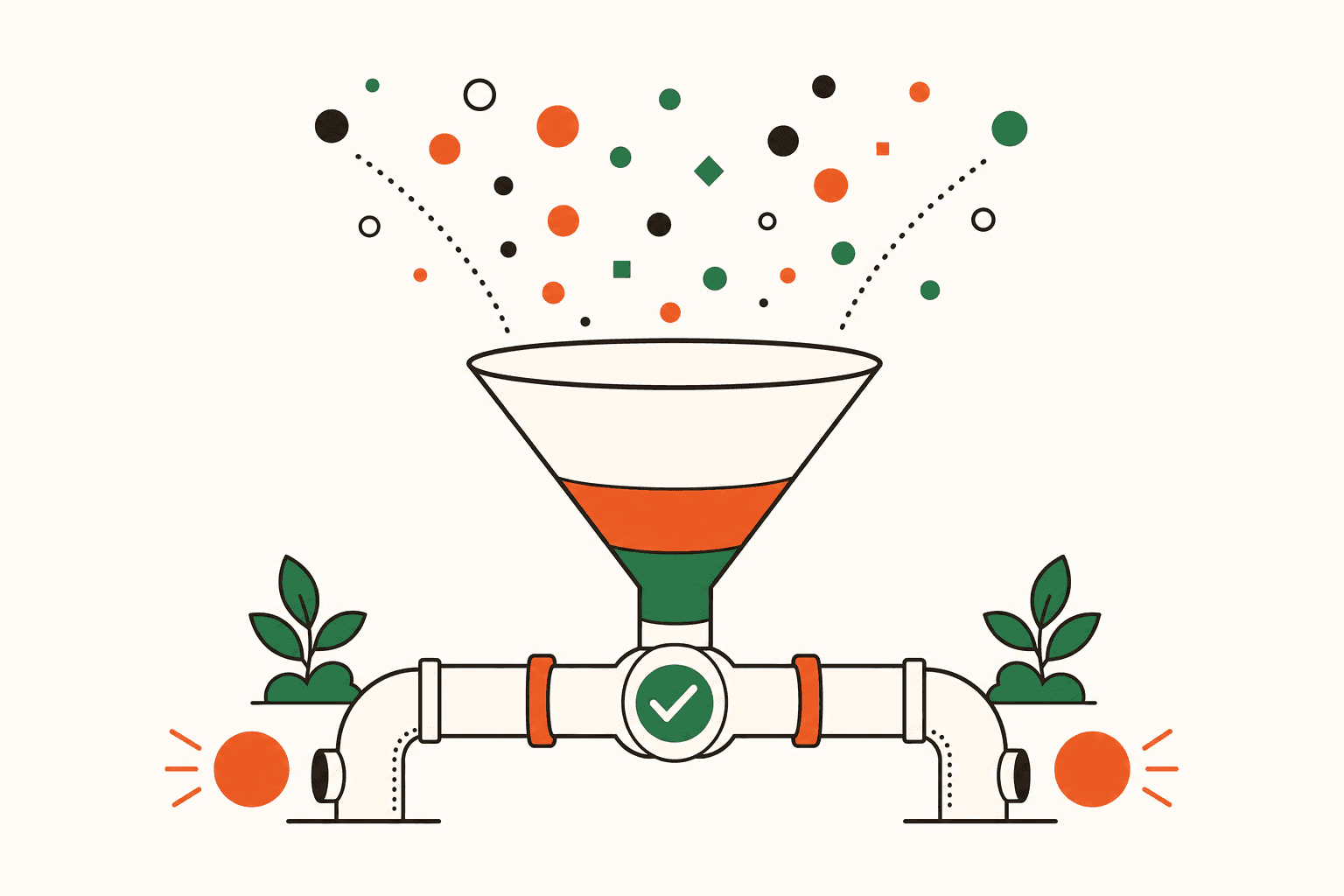
You've got three prospects in your pipeline right now. Maybe four if you count the guy who asked for a quote six weeks ago and hasn't responded to your last two follow-ups. You had a good referral come in last month, closed it, and now you're back to watching your inbox hoping something materializes.
Here's the thing: most MSP owners in this position assume they have a sales problem. They think they need to get better at closing, or sharpen their proposal, or maybe finally hire someone to do outreach. But if you're consistently sitting at three to five active prospects instead of twenty to thirty, you almost certainly have a lead generation problem — and more specifically, a system problem. Not a tactics problem. A system problem.
This post is a diagnostic. It's going to walk you through the five places MSP pipelines leak before a prospect ever reaches you — and give you a way to figure out which ones are actually costing you the most. Because the answer isn't the same for every MSP, and doing the wrong fix wastes months.
Leak #1: You're Calling What You Have a "Pipeline" When It's Actually Just a List of People Who Called You
The most common thing I see when I first talk to an MSP owner is that their "pipeline" is really just a log of inbound inquiries. Referrals, a couple of Google leads, maybe someone who responded to an email blast from three years ago. Those are leads that found you. That's not a pipeline — that's a waiting game.
A real lead generation system has inputs you control. You decide how many companies enter the top of the funnel each week. You know which channels they come from. You can turn the volume up or down based on your capacity to close and onboard.
If you can't answer "how many net-new prospects entered my pipeline last week, and where did they come from," you don't have a system — you have luck.
The fix isn't complicated, but it requires a mindset shift. You need at least one outbound channel running in parallel with whatever inbound you're getting. That could be cold email, LinkedIn outreach, cold calling, or targeted direct mail to a specific vertical. The channel matters less than the fact that it's systematic and measurable.
If you're not sure where to start with outbound, this cold call framework gives you a starting point that's built for how MSP buyers actually respond — not how sales trainers think they respond.
Leak #2: Your Target List Is Killing Your Conversion Rate Before You've Said a Word
Let's say you're doing outreach. You bought a list, you're sending emails, maybe you're making calls. And you're getting almost nothing back. Before you blame your messaging, look at who's on that list.
This is where most MSPs bleed. They buy a generic "small businesses in [city]" list, or they scrape LinkedIn for companies with 10–50 employees, and they blast away. The problem is that a 20-person accounting firm and a 20-person manufacturing company have completely different IT needs, different buying timelines, different risk profiles, and different decision-makers. Treating them the same means your messaging lands flat with everyone.
The MSPs I see generating the best pipeline from outreach have usually done one of two things:
- They've niched by vertical. Legal, healthcare, financial services, construction — pick one and build your list around it. Your messaging gets sharper, your referral network within that vertical compounds, and you stop competing on price because you're positioned as a specialist. If you're not sure whether niching is right for you, this post on vertical focus is worth reading before you decide.
- They've filtered by fit signals. Seat count is the obvious one — most MSPs have a sweet spot somewhere between 15 and 75 seats where their pricing and service model work well. But fit signals also include things like: are they in a regulated industry (HIPAA, PCI, FINRA)? Do they have a dedicated office location or are they remote-first? Have they had a breach or compliance incident in the last two years?
A list of 500 genuinely well-targeted companies will outperform a list of 5,000 spray-and-pray contacts every time. Not because the math works out — because your messaging actually resonates with the 500, and you can personalize enough to get responses.
Leak #3: Your Messaging Talks About What You Do Instead of What They're Afraid Of
Pull up the last outreach email you sent. Or your website homepage. Or your LinkedIn profile. Now ask yourself: does this read like it was written for a 45-year-old business owner who runs a 30-person professional services firm and has never once thought about "managed services" — or does it read like it was written for someone who already knows what an MSP is?
Most MSP marketing talks to an audience that doesn't exist. Business owners don't think in terms of RMM tools, endpoint protection stacks, or NOC coverage. They think in terms of: what happens if we get hit with ransomware? What do I do when my office manager quits and she was the only one who knew the passwords? Why did we just spend $40,000 recovering from a breach when we were paying an IT company?
Your messaging needs to start where they are — in their world, with their vocabulary, about their fears. That doesn't mean dumbing it down. It means translating. "24/7 monitoring and alerting" means nothing to a business owner. "We catch problems before your team shows up Monday morning to find nothing works" means something.
This is especially true for cold outreach, where you have about eight seconds of attention before someone decides whether to keep reading. If your first sentence is about your company, your services, or your certifications, you've already lost them.
Leak #4: You're Generating Interest But Not Capturing It
Here's a scenario I see constantly: an MSP runs a LinkedIn campaign, or sends a cold email sequence, or gets a mention in a local business newsletter. They get some clicks. Some people visit the website. And then... nothing. No calls booked, no forms filled out, no follow-up possible.
This is a conversion infrastructure problem. Most MSP websites are built to describe the company, not to convert a skeptical prospect who's doing their first pass of research. If someone visits your site after seeing your outreach and can't immediately figure out:
- What kind of businesses you work with
- What it actually looks like to work with you
- What they should do next if they're interested
...they leave, and you never know they were there.
The fix here isn't a full website rebuild. It's a focused landing page — one page that speaks directly to the prospect segment you're targeting, with a single clear call to action (usually a 30-minute discovery call or a free assessment). Everything else is noise.
Your Google Business Profile is also part of this. If someone Googles your company name after seeing your outreach, what they find either confirms you're legitimate or raises doubts. This post covers what your GBP should actually look like if you haven't cleaned it up recently.
Leak #5: Your Follow-Up Dies After Two Touches
You sent the email. They didn't respond. You sent a follow-up three days later. Still nothing. You moved on.
That prospect is now in a dead pile that probably has 200 other companies in it — most of whom were actually a decent fit, just not ready to buy the week you reached out.
The average B2B buying decision for managed services takes 6–18 months from first awareness to signed contract. The business owner you emailed in January might not be ready to switch providers until their current contract expires in October. If you gave up after two emails, you're invisible when they finally start looking.
This doesn't mean harassing people. It means building a nurture sequence that keeps you in front of qualified prospects over time — without asking them to buy something every time. That could be a monthly email with something genuinely useful (a real security alert affecting their industry, a compliance deadline they need to know about, a case study from a company like theirs). It could be a LinkedIn connection with occasional engagement. The goal is to be the MSP they think of when the timing is finally right.
Most MSPs don't do this because it feels like a lot of work for uncertain return. The ones who do it consistently tell me it's where 30–40% of their closed deals eventually come from.
What Most MSPs Get Wrong: Treating All Three Prospects as "Good Signs"
Here's the honest version of what I see: an MSP owner has three prospects in the pipeline, and they're spending 80% of their sales energy on all three — including the one who's clearly not a fit, the one who's fishing for a price to show their current vendor, and the one who's genuinely interested but 90 days out from being ready to decide.
The problem isn't just that the pipeline is thin. It's that a thin pipeline makes you treat every lead like gold, even when it isn't. And that means you're wasting time on unqualified prospects that could be spent building the system that fills the pipeline in the first place.
When your pipeline has 30 prospects in it, you can afford to qualify hard and walk away from bad fits. When it has three, you can't — psychologically or financially. That's why fixing the pipeline volume problem is the prerequisite to everything else.
How to Think About This at Your Stage
If you're under $1M ARR, your priority is simple: get one outbound channel working before you try to optimize anything else. Pick cold email or cold calling, build a targeted list of 300–500 companies that fit your ideal client profile, and run it consistently for 90 days. Don't touch your website. Don't worry about LinkedIn content. Don't buy ads. One channel, done well, will tell you more about your market than any amount of strategy work.
If you're between $1M and $3M ARR, you probably have some inbound working and you're trying to scale it. This is where conversion infrastructure matters — your website, your follow-up sequences, and your nurture system. You're leaving deals on the table not because people aren't finding you, but because you're not capturing and following up with the interest you're already generating.
If you're above $3M ARR and still sitting at three to five active prospects, the issue is usually targeting. You've outgrown the market segment you started in, or you're too generalist to stand out, or your referral network has plateaued. This is where vertical focus and positioning work pays off.
Wherever you are, a 30-minute call usually surfaces the specific leak that's costing you the most. That's what the free strategy call is for — not a pitch, just a diagnostic.
The Real Problem With a Thin Pipeline
A three-prospect pipeline isn't just a revenue problem. It's a decision-quality problem. It makes you close deals you shouldn't close, hold onto clients you should fire, and avoid the positioning work that would attract better clients — because you can't afford to be selective when the pipeline is empty.
The goal of fixing your lead generation isn't to get busy. It's to get to the point where you can afford to say no to the wrong clients and yes to the right ones. That's where the real margin lives.
If you've read this and you're not sure which leak is the biggest one for your business, see if you qualify to work with us. We only take on MSPs who are serious about building a repeatable pipeline — and we back it with a lead guarantee because we're confident enough in the process to put something on the line.
Ready to Build a Real Pipeline?
A 30-minute call with Gavin to discuss your marketing situation and see if we're a good fit. I run marketing campaigns for MSPs - no pitch, just an honest conversation about what you need.