The MSP Lead Funnel Leakage Audit: Why 60% of Your Qualified Prospects Disappear Between First Contact and Proposal
You ran a LinkedIn ad campaign last quarter. Got 14 inquiries. Booked 6 discovery calls. Sent 3 proposals. Closed 1 client....
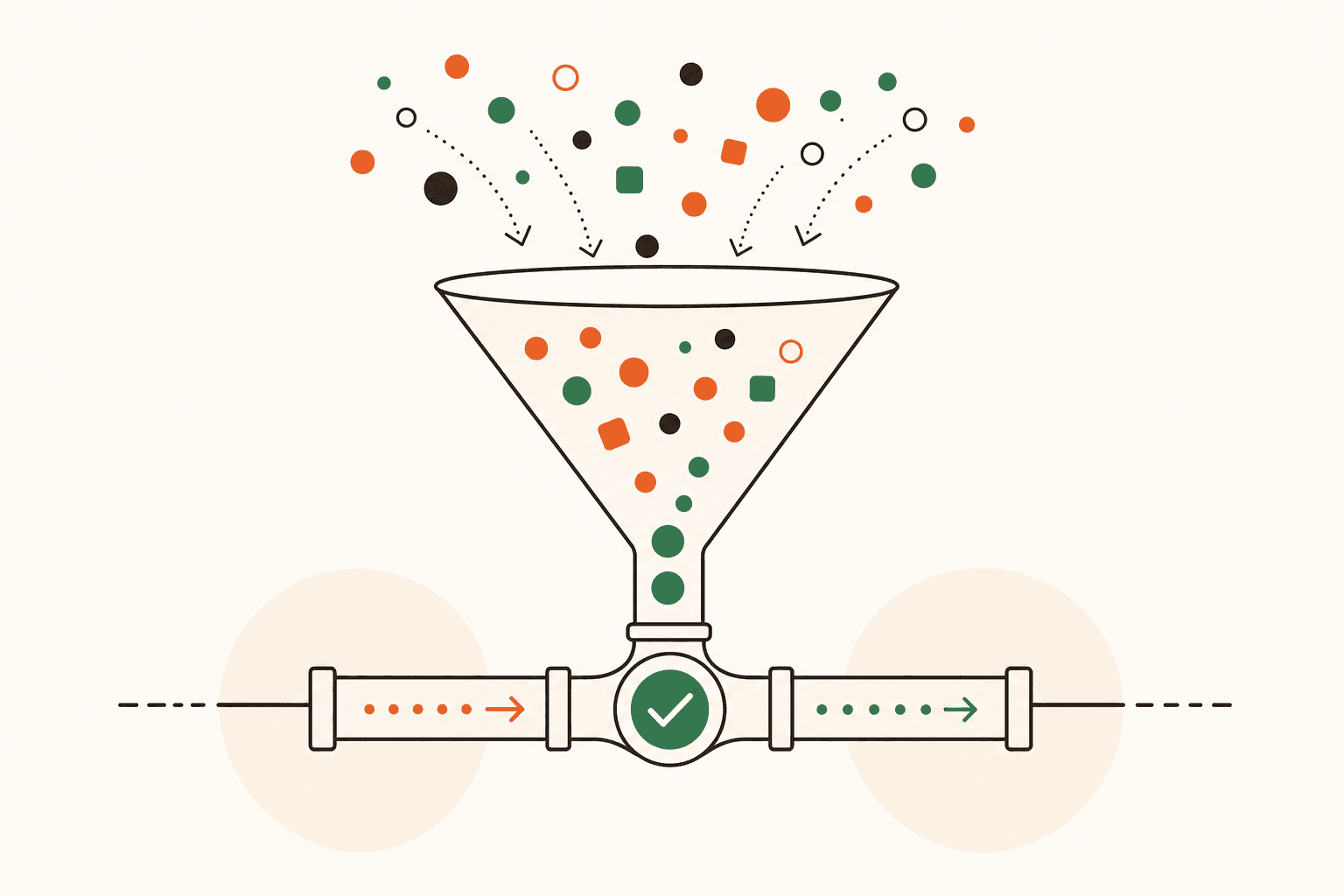
You ran a LinkedIn ad campaign last quarter. Got 14 inquiries. Booked 6 discovery calls. Sent 3 proposals. Closed 1 client.
Your takeaway: LinkedIn doesn't work for MSPs.
Here's what actually happened: LinkedIn worked fine. You lost 13 potential clients somewhere between "interested" and "signed," and you have no idea where. That's not a lead generation problem. That's a funnel leakage problem—and it's one of the most expensive misdiagnoses in MSP sales.
Most MSP owners I talk to are in the same place. They've tried a channel, gotten mixed results, and moved on to the next thing—cold email, Google Ads, a BDR hire, a referral partner program. The channel rotates. The close rate stays flat. The real culprit is the invisible drop-off that happens after first contact, and because it's invisible, it never gets fixed. This post will walk you through exactly how to audit your funnel, find the leaks, and patch them—so the next time you run a campaign, you're not throwing leads into a bucket with a hole in the bottom.
First, Map Where Prospects Actually Go
Before you can find the leaks, you need an honest map of your current follow-up sequence. Not the one you intend to run. The one that actually happens.
Pull the last 20 inbound inquiries you received—whether they came from referrals, ads, cold outreach, or your website. For each one, answer:
- Did they get a response within the same business day?
- Did that response include a specific next step with a calendar link or a proposed time?
- If they didn't book, did you follow up? How many times? Over how many days?
- If they booked a discovery call, did you send a pre-call confirmation with an agenda?
- If the call happened, how long before they received a proposal?
- If you sent a proposal, how many follow-up touches did you make before marking them lost?
Most MSPs get through this exercise and realize they don't actually have a follow-up sequence. They have a series of improvised reactions. Someone inquires, you respond when you have time, maybe follow up once if you remember, send a proposal when you get around to it, and then move on when you don't hear back. That's not a pipeline. That's a lottery.
The benchmark to know: Research across B2B service sales consistently shows that 80% of deals require five or more follow-up touches after initial contact. The average MSP makes 1.3. That gap is where your pipeline is dying.
The Five Leak Points (And What's Causing Them)
Once you have your map, you can start identifying which of these five stages is bleeding the most.
Leak 1: First Response Latency
A prospect fills out your contact form on a Tuesday at 2pm. You respond Thursday morning. They've already talked to two other MSPs.
The MSP reality here is specific: your buyers are business owners—a 40-person accounting firm, a regional logistics company, a dental group with three locations. They're not IT people. They reached out because something broke, something scared them, or they finally got fed up with their current provider. That emotional window is short. A 36-hour response time doesn't just lose the race—it signals that you're not operationally sharp, which is exactly what they're trying to hire you to be.
Fix: Build a response SLA into your process the same way you'd build one into a client contract. First response within two business hours during working hours, with an automated acknowledgment that sets expectations if it's after hours. This is a process change, not a marketing change.
Leak 2: The Vague Next Step
You respond quickly, but your message ends with "let me know if you'd like to connect sometime." The prospect says "sure, sounds good." And then nothing happens.
Every piece of outbound communication in your funnel needs a single, specific, frictionless next step. Not "let's connect." Not "feel free to reach out." A direct calendar link, a proposed time, or a yes/no question. The more friction between "interested" and "booked," the more prospects fall out—not because they lost interest, but because you made them do work.
Leak 3: No Pre-Discovery Call Nurture
A prospect books a call two weeks out. Between booking and the call, they hear nothing from you. By the time the call happens, their urgency has cooled, they've had three conversations with competitors, and they're showing up with lower intent than when they booked.
What most MSPs get wrong here: they treat the calendar confirmation as the finish line. It's not. It's the start of a short nurture window where you can do significant work. A two-email sequence between booking and the call—one that shares a relevant case study or client outcome, one that sends a pre-call agenda—increases show rates and call quality measurably. The prospect shows up having already seen evidence that you understand their world. The conversation starts at a different level.
Leak 4: Proposal Timing and Presentation
You had a great discovery call. You said you'd send a proposal "in the next few days." Eight days later, you send a PDF. The prospect has moved on mentally, or worse, they've received a faster proposal from a competitor and signed it.
Two problems compound here. First, timing: proposals should go out within 48 hours of the discovery call while the conversation is still fresh. Second, format: a static PDF with a line-item breakdown of your stack is not a proposal. It's a quote. There's a difference, and it's costing you deals. If you want to dig into what separates proposals that close from ones that don't, this post on why MSPs lose proposals they should win covers the mechanics in detail.
Leak 5: Post-Proposal Follow-Up Abandonment
This is the biggest leak for most MSPs, and it's the one they're most uncomfortable fixing.
You send the proposal. You follow up once. Silence. You assume they went with someone else and move on. In reality, a meaningful percentage of those "silent" prospects are still in play—they're busy, they're in internal discussions, they're waiting on a board approval, or they're genuinely interested but need a nudge that feels like help, not pressure.
The standard I recommend: five follow-up touches over 21 days after a proposal goes out, with each touch adding something rather than just asking "did you see my email?" Touch two might share a relevant case study. Touch three might flag a compliance deadline or a security event in their industry. Touch four might be a short video walkthrough of one section of the proposal. Touch five is a direct, honest close: "I want to make sure this doesn't fall through the cracks—are we still a fit to move forward, or should I close this out?"
That last message gets responses. Often positive ones.
Build the Audit: What to Actually Measure
Here's how to structure the audit for your last 20–30 prospects. Run this in a spreadsheet—your PSA tool probably won't have all of this unless you've built custom fields.
| Stage | Metric to Track | Target Benchmark |
|---|---|---|
| First response | Hours from inquiry to first reply | Under 2 business hours |
| Call booking rate | % of inquiries that book a discovery call | 50–65% |
| Show rate | % of booked calls that actually happen | 80%+ |
| Proposal rate | % of discovery calls that result in a proposal | 60–70% |
| Close rate | % of proposals that convert to clients | 25–35% |
| Follow-up touches | Average touches made post-proposal | Should be 4–6 |
When you map your actual numbers against these benchmarks, the leak almost always becomes obvious. If your call booking rate is 30%, your first response or your next-step clarity is the problem. If your show rate is 55%, you need pre-call nurture. If your close rate is under 20%, it's either proposal quality or post-proposal follow-up—or both.
The point isn't to hit every benchmark simultaneously. It's to find the one stage where you're losing the most volume and fix that first.
What Most MSPs Do Wrong: Blaming the Lead Source
I've seen this pattern dozens of times. An MSP invests in cold outreach, gets 10 qualified conversations, closes one, and concludes that cold outreach "doesn't work for MSPs." They switch to Google Ads. Same result. They try a referral partner program. Same result.
The lead source wasn't the problem. A 10% close rate on qualified, interested prospects is a funnel problem. A healthy funnel should convert 25–35% of discovery calls to signed agreements. If you're closing 10%, you're losing two out of every three prospects who already wanted to talk to you—and that math doesn't change when you switch channels.
The expensive part of this mistake: every time an MSP switches channels instead of fixing their funnel, they reset their learning curve, spend money on a new channel, and carry the same broken process into it. The channel rotation feels like action. It's actually avoidance.
Fix your funnel before you scale your lead generation. Scaling a leaky funnel just means losing more prospects faster.
How to Think About This at Your Stage
If you're under $1M ARR with a small team, you probably don't have a dedicated salesperson. You're running discovery calls yourself between client escalations and vendor calls. In that environment, the highest-leverage fix is almost always Leak 1 and Leak 2—first response time and next-step clarity. Those are process changes you can implement this week without building anything complicated.
If you're between $1M and $3M ARR and you've got some sales motion in place, Leak 5 is almost certainly your biggest opportunity. You're generating enough proposals that a 10-point improvement in close rate has real revenue impact. A structured post-proposal follow-up sequence—even a simple five-touch email cadence—can move the needle significantly within a single quarter.
If you're above $3M and you're investing in paid lead generation, run the full audit before you increase spend. Doubling your ad budget into a funnel that's converting at 15% is an expensive way to not grow.
If you want help mapping where your specific funnel is leaking—and what to fix first given your current ARR and team structure—a 30-minute strategy call is usually enough to surface the exact bottleneck. It's not a sales pitch; it's a diagnostic.
The Uncomfortable Truth About Your "Lost" Prospects
Most of the qualified prospects who disappeared between first contact and proposal didn't go to a competitor because the competitor was better. They went there because the competitor followed up. They responded faster. They sent a proposal in 24 hours. They called after the proposal went out.
You had the better service. You had the better team. You lost the deal because your process assumed the prospect would do the work of staying engaged.
They won't. And they shouldn't have to.
Run the audit. Find the one stage where you're losing the most volume. Fix that stage before you touch anything else. When you've patched that leak, move to the next one. This is not glamorous work, but it is the work that turns a $2M MSP into a $4M MSP without doubling your marketing budget.
If you're ready to look at your funnel with fresh eyes and want a second opinion on where the real bottleneck is, see if you qualify to work with Behold Digital. We only take on MSPs who are ready to build something systematic—not MSPs looking for a quick fix that doesn't exist.
Ready to Build a Real Pipeline?
A 30-minute call with Gavin to discuss your marketing situation and see if we're a good fit. I run marketing campaigns for MSPs - no pitch, just an honest conversation about what you need.